
Blogs
Dark Atmospheres vs Unseen Forces: Gothic Horror vs Supernatural Horror Explained

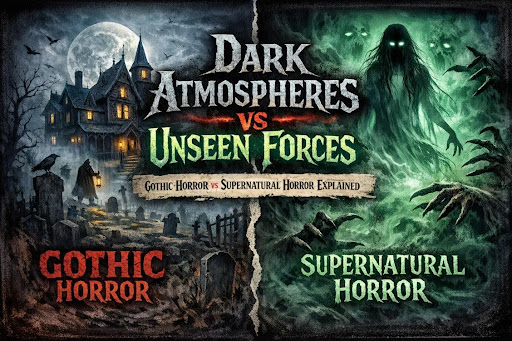
Horror fiction takes many forms, each designed to evoke fear in different ways. Two of the most influential subgenres are gothic horror and supernatural horror. While they often overlap, each has its own distinct style, themes, and approach to fear. Understanding the difference between these genres helps readers and writers appreciate how horror can be shaped by atmosphere, psychology, and the unknown.
Defining Gothic Horror
Gothic horror is rooted in atmosphere, emotion, and setting. It often takes place in dark, isolated locations such as old mansions, castles, or decaying landscapes. The focus is not only on fear but also on mystery, romance, and psychological tension.
In gothic horror, the sense of dread builds gradually through mood and environment. The past often plays a significant role, with secrets, curses, or unresolved events influencing the present. Fear in this genre is deeply connected to human emotions and inner conflict.
Defining Supernatural Horror
Supernatural horror, on the other hand, centers on forces that go beyond the natural world. It involves elements such as ghosts, spirits, or unexplained phenomena that cannot be explained by science or logic.
The fear in supernatural horror comes from encountering something unknown and beyond human control. These stories often focus on the presence of otherworldly entities or events that disrupt reality, creating a sense of danger and unpredictability.
Differences in Setting and Atmosphere
One of the main differences between gothic and supernatural horror lies in their settings. Gothic horror relies heavily on atmosphere, using detailed descriptions of dark and haunting environments to create tension. The setting itself often feels like a character, shaping the mood of the story.
Supernatural horror may also use eerie settings, but its primary focus is on the presence of the supernatural. The environment supports the story, but it is not always the central source of fear.
Focus on Psychology vs the Unexplained
Gothic horror tends to focus more on psychological elements. Characters often struggle with guilt, fear, or emotional conflict, and these internal struggles contribute to the overall sense of horror. The fear may come as much from the mind as from external events.
In contrast, supernatural horror emphasizes the unexplained. The presence of forces beyond human understanding creates fear that is external and often immediate. While psychological elements can still be present, they are usually secondary to the supernatural threat.
Role of the Supernatural Elements
Although gothic horror may include supernatural elements, they are not always central to the story. Sometimes the events can be explained through human actions or psychological states, leaving ambiguity about what is real.
Supernatural horror, however, relies directly on the existence of the supernatural. The story often confirms that these forces are real within the narrative, making them the primary source of tension and fear.
Emotional Tone and Themes
Gothic horror often carries a melancholic and reflective tone. It explores themes such as decay, isolation, and the influence of the past. The emotional depth of the story is as important as the fear it creates.
Supernatural horror tends to focus more on shock, tension, and the fear of the unknown. Its themes often revolve around the intrusion of something unnatural into the normal world, creating immediate danger.
Conclusion
Gothic horror and supernatural horror both aim to evoke fear, but they do so in different ways. Gothic horror relies on atmosphere, emotion, and psychological tension, while supernatural horror focuses on forces beyond human understanding. By exploring these differences, readers can better appreciate the variety within horror fiction and the unique ways in which stories can create a sense of fear and suspense